

Complete Food Panel (IgG) - 240 Foods
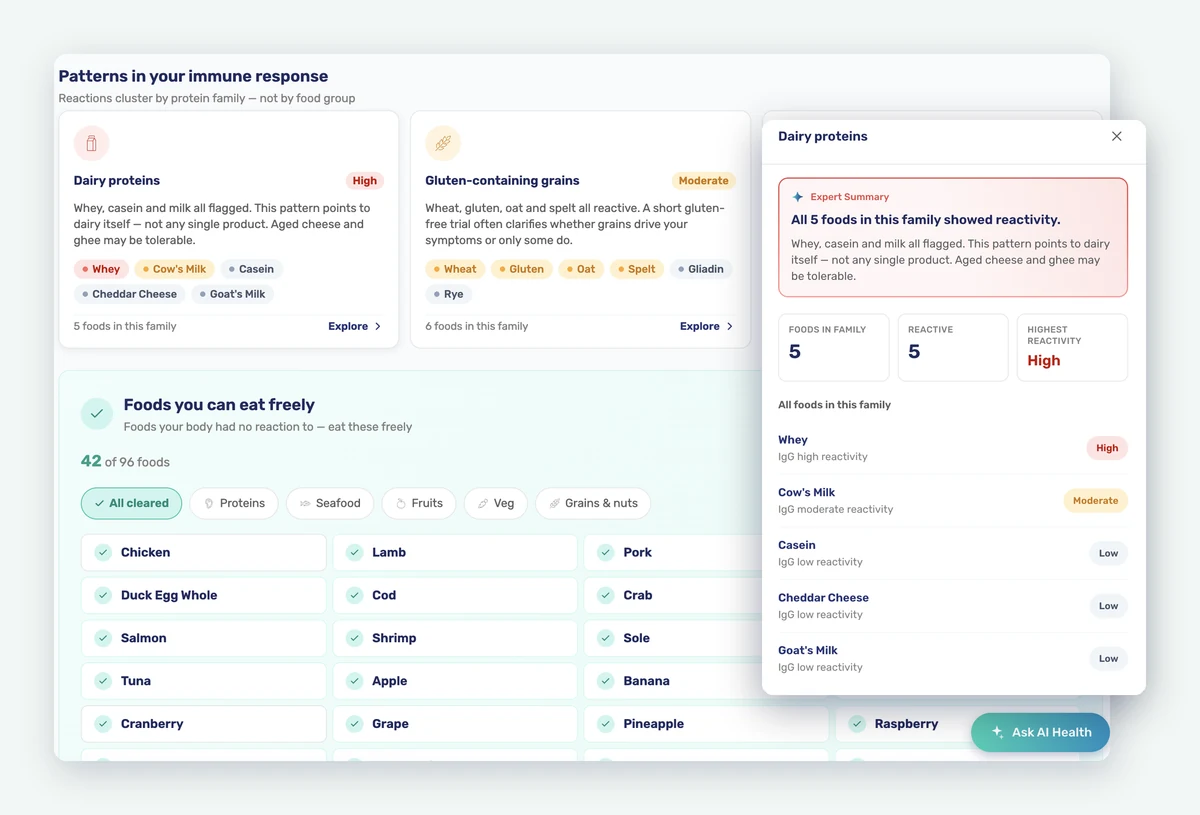
A food intolerance response takes place in the gut, and it occurs when you are unable to properly break down the food. This could be due to enzyme deficiencies, sensitivity to food additives or reactions to naturally occurring chemicals in foods. Often people can eat small amounts of the food without causing problems. The results are best used as a discussion point with a qualified practitioner who can interpret them alongside your symptoms and history rather than as a stand-alone diagnosis.
Our food intolerance range assesses your antibody response to the foods you eat. Choose the panel that suits your diet - from a focused 96-food screen up to our most comprehensive 240-food assessment - with options weighted toward Western, Asian or plant-forward diets. Your sample is screened using the ELISA method, and you can select the antibody marker that fits your needs: IgG for delayed-type responses, IgA for mucosal gut-lining responses, an IgG + IgA combination for the fullest picture, or our IgG4 subclass option. View our Guide to Food Intolerance Testing for more information.
Our broadest food assessment
The Complete Food Panel screens 240 foods — an extensive assessment for people who want the widest possible coverage. It is typically chosen by those who have already trialled elimination diets without clear answers, people with very varied or specialty diets, and clients working with a practitioner who wants the fullest possible dataset.
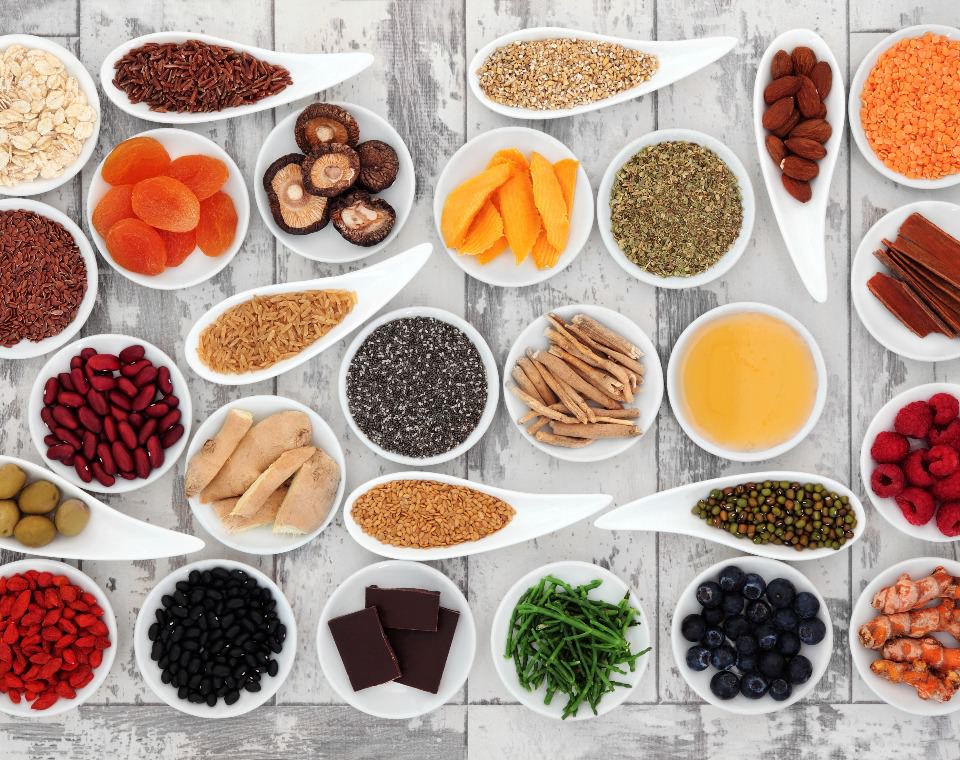
What the 240 adds: extended dairy including beta-lactoglobulin, blue, buttermilk, cottage, mozzarella, sheep’s milk, Swiss and yogurt; a 32-strong seafood range; ancient grains and seeds such as amaranth, teff, sorghum, chia, hemp, poppy and safflower, plus wheatgerm agglutinin (lectin); an extensive fruit range including elderberry, goji, mangosteen, monk fruit, passion fruit and pomegranate; game meats; a 46-item herb, spice and botanical list including ginseng, green tea, licorice, stevia, turmeric and yerba mate; and a 40-item vegetable range including burdock root, kelp, kohlrabi, lotus root, wasabi and okra. If you are starting out, the 96-food panel is the more practical first step.

IgG - delayed-type antibody responses
IgG is our most popular marker and the right default if you are unsure. It measures delayed-type antibody responses to the foods you eat, giving you a structured starting point for an elimination and reintroduction plan.
IgG reflects your body’s antibody response and exposure to a food. It is a guide to work through with a practitioner, not a diagnosis on its own, and it is different from IgE allergy testing — it does not diagnose a food allergy or coeliac disease.
Prefer a different marker? IgA looks at gut-lining responses, the IgG + IgA combination covers both, and IgG4 is a specific subclass.
Your results also come with a suggested Personal Rotation Diet Guideline designed to reduce food sensitivities, enhance nutrient diversity, and support gut health. This involves rotating different food groups every 3–4 days to minimise immune system reactivity, prevent overexposure to specific allergens, and promote a diverse gut microbiome.
Following receipt of your results, consider a teleconsult with our dietitian for nutrition and meal planning advice in the context of your current health goals.
This is a finger prick blood spot test that doesn't require a visit to a collection centre. If you would prefer a blood draw at a collection centre, you can add the venous blood draw service to your order here.
What's included
Antibody responses to dairy can be relevant to gut health, immune function and overall well-being. These proteins can be difficult to digest and may be associated with inflammation, skin issues, sinus congestion and digestive discomfort in sensitive individuals. This panel includes: beta-Lactoglobulin, Blue Cheese, Buttermilk, Casein, Cheddar Cheese, Cottage Cheese, Cow's Milk, Goat's Milk, Mozzarella Cheese, Sheep's Milk, Swiss Cheese, Whey, Yogurt.
Antibody responses to seafood proteins may be associated with digestive discomfort, skin reactions and immune activation, and can relate to cross-reactivity with other animal proteins or to histamine intolerance. This panel includes: Anchovy, Bass, Carp, Catfish, Clam, Cod, Crab, Crayfish, Eel, Flounder, Haddock, Halibut, Herring, Lobster, Mackerel, Mussel, Octopus, Oyster, Perch, Pike, Red Snapper, Salmon, Sardine, Scallop, Sea Urchin, Shrimp, Sole, Squid, Swordfish, Tilapia, Trout, Tuna.
Antibody responses to grains, legumes, nuts and seeds may be associated with digestive discomfort, inflammation and nutrient malabsorption, and can relate to gut barrier function or cross-reactivity with other plant proteins. This panel includes: Adzuki Bean / Red Bean, Almond, Amaranth, Barley, Black-Eyed Pea, Bran, Brazil Nut, Brown Rice, Buckwheat, Canola Seed, Cashew Nut, Chestnut, Chia Seed, Chickpea, Coconut, Cola Nut / Kola Nut, Corn, Fava Bean, Fenugreek Seed, Gingko Nut, Gliadin, Gluten, Green Bean, Green Pea, Hazelnut, Kidney Bean, Lentil, Lima Bean, Macadamia Nut, Malt, Millet, Mung Bean, Navy Bean / White Bean, Oat, Peanut, Pecan, Pine Nut, Pinto Bean, Pistachio Nut, Poppy Seed, Pumpkin Seed, Quinoa, Rye, Safflower Seed, Sorghum, Soybean, Spelt, Teff, Walnut, White Rice, Wheatgerm Agglutinin (lectin), Whole Wheat.
Antibody responses to fruits may be associated with digestive discomfort, skin reactions and inflammation, and can relate to fructose malabsorption, histamine intolerance or sensitivity to natural fruit sugars and phenolic compounds. This panel includes: Apple, Apricot, Banana, Blackberry, Black/Red Currant, Blueberry, Cantaloupe, Cherry, Cranberry, Date, Elderberry, Fig, Goji Berry, Gooseberry, Grapefruit, Grape, Guava, Honeydew, Jackfruit, Kiwi, Kumquat/Cumquat, Lemon, Lime, Lychee/Litchi, Mango, Mangosteen, Monk Fruit, Olive, Orange, Papaya, Passion Fruit, Peach, Pear, Persimmon, Pineapple, Plum, Pomegranate, Prune, Raspberry, Strawberry, Tangerine, Watermelon.
Antibody responses to animal proteins may be associated with digestion, skin health and immune balance, and can relate to protein metabolism or gut barrier function.. This panel includes: Beef, Buffalo, Chicken, Duck, Goose, Lamb, Pork, Rabbit, Turkey, Venison.
Antibody responses to animal proteins may be associated with digestion, skin health and immune balance, and can relate to protein metabolism or gut barrier function. This panel includes: Chicken Egg White, Chicken Egg Yolk, Duck Whole Egg
Antibody responses to herbs and spices may be associated with digestive discomfort, inflammation and skin reactions in sensitive individuals. These contain bioactive compounds that can affect the gut lining where barrier function is compromised. This panel includes: Allspice, Aloe Vera, Anise, Baker's / Brewer's Yeast, Basil, Bay Leaf, Black Pepper, Black Tea, Button Mushroom, Cane Sugar, Caraway Seed, Chili Pepper, Cinnamon, Clove, Cocoa Bean (Chocolate), Coffee, Coriander, Curry Powder, Dill, Fennel Seed, Flaxseed, Ginger, Ginseng, Green Tea, Hemp, Honey, Hops, Licorice, Mustard, Oregano, Paprika, Parsley, Peppermint, Rosemary, Sage, Sesame Seed, Shiitake Mushroom, Stevia, Sugar/Maple, Sunflower Seed, Sweet Marjoram, Tarragon, Thyme, Turmeric, Vanilla, Yerba Mate.
Antibody responses to vegetables may be associated with digestive discomfort, inflammation and immune activation, and can relate to cross-reactivity or histamine intolerance where the gut barrier is compromised. This panel includes: Arrowroot, Artichoke, Asparagus, Avocado, Bamboo Shoot, Beet, Broccoli, Brussel Sprouts, Burdock Root, Cabbage, Carrot, Cauliflower, Celery, Chard, Chives, Cucumber, Eggplant, Endive, Garlic, Green Bell Pepper, Horseradish, Kale, Kelp, Kohlrabi, Leek, Lettuce, Lotus Root, Okra, Onion, Pumpkin, Radish / Daikon, Rhubarb, Spinach, Squash, Sweet Potato, Tomato, Turnip, Wasabi, White Potato, Zucchini.
Antibody responses to Candida may indicate an overgrowth of this yeast in the gut, which can disrupt the microbiome and has been associated with symptoms such as bloating, fatigue, brain fog and skin issues. This panel includes: Candida Albicans
Test instructions

You’ll receive your finger prick blood spot test kit and instructions in the mail. There is no need to visit a collection centre.

Results for this test available in 12-15 days and will be published in your online dashboard.
Ready. Set. Go!
Buy now for $789

Common Questions
You may also be interested in
Allergy Test
Allergies are on the increase, and food allergies in particular are becoming more common. Measure IgE antibodies across 27 common food and environmental allergens. These allergens may be from foods, pollens, house dust, animal hair or moulds.
FODMAP Test
FODMAPs are naturally occurring sugars found in milk and dairy products, fruits and vegetables, cereals and processed foods. These dietary sugars are poorly absorbed in the gut and can cause symptoms of irritable bowel syndrome.
Platinum Gut Health Test
This comprehensive gut health panel, combining multiple advanced assessments to provide a complete picture of digestive function. It includes the Microbiomics Advanced Gut, a Food Intolerance Test, an Intestinal Permeability (Leaky Gut) Test, and a breath test for SIBO to measure bacterial overgrowth in the small intestine. Together, these offer an in-depth, holistic understanding of your gut health.